Redoxon Vitamin C 500mg

Redoxon Vitamin C 500mg

Vitamin A Facts: Everything You Need to Know

Medically Reviewed by Dr Samantha Miller, MBChB

Photo Courtesy: Dean Mitchell/E+/Getty Images

Vitamin A should be an integral part of every person's diet. It plays vital roles in your body by helping to maintain your vision, skin health and even your immune system's ability to work properly. But it's important to consume the right amount; vitamin A can be harmful when your body gets too much of it. Learn more about vitamin A, including what it does, where to find it and what happens when you get too much of it.

What Does Vitamin A Do?

Vitamin A is actually a group of fat-soluble vitamins like retinol, retinal and retinyl esters, all of which have various health benefits. Vitamin A is particularly important in the maintenance of vision — especially your ability to see in low light. Your body converts this vitamin to retinal, which combines with other molecules to form rhodopsin. This is the protein principally responsible for your eyes' absorption of light. If you're worried about your vision getting worse over time, make sure you get enough vitamin A. It's a good way to strengthen your sight naturally.

Photo Courtesy: Nastasic/E+/Getty Images

Consuming sufficient amounts of vitamin A can also work wonders for your immune system. Vitamin A promotes the production of white blood cells, particularly T cells, which eliminate viruses and bacteria from your body. Vitamin A also stimulates the production of special T cells called regulatory T cells. These help to reduce the risk of your body attacking its own healthy cells, which is what happens with some autoimmune diseases. Furthermore, vitamin A fortifies the linings of your respiratory, intestinal and urinary tracts, along with your skin and mucous membranes. It also sends additional immune cells there to prevent bacteria from entering your body and causing an infection.

Vitamin A is also involved in the maintenance of healthy skin by helping immature skin cells age properly into mature skin cells. It reduces sebum production, which can be problematic in oily skin. In fact, Isotretinoin is a common prescription-only vitamin A derivative used as a treatment for acne.

Vitamin A can also contribute to improved bone growth, cell division and cell differentiation. It even promotes reproduction and is a healthy supplement for people who are breastfeeding.

Food Sources of Vitamin A

Vitamin A is quite easy to come by naturally. Many of the most basic staples in our diets — meat, eggs, milk and cheese, for example — are excellent sources of vitamin A. Other specific animal sources have high vitamin A levels as well, such as kidney and liver. However, it's important to note that some of these foods have high cholesterol and saturated fat levels, so be sure to keep a healthy balance of these in your diet if you choose to eat them.

Photo Courtesy: GMVozd/E+/Getty Images

Vitamin A exists as either preformed vitamin A or as provitamin A carotenoids. Preformed vitamin A is found in animal and dairy sources. Provitamin A carotenoids include beta-carotene and alpha-carotene, which your body converts into vitamin A and other derivatives. Beta-carotene is found in foods like carrots, pumpkins, sweet potatoes, cantaloupes, grapefruits, spinach, broccoli and apricots. As a general rule, the more vibrant the color of a fruit or vegetable is, the more beta-carotene it contains. As a bonus, you won't have to worry about the fat or cholesterol content in these foods.

Side Effects of Too Much Vitamin A

Getting the right amount of vitamin A in your diet shouldn't have any negative side effects. However, a vitamin A deficiency can lead to health issues over time. If you don't get enough vitamin A, you could develop vision problems. Plus, your immune system could weaken, leaving you susceptible to infectious diseases.

Photo Courtesy: AsiaVision/E+/Getty Images

Perhaps even more serious are the side effects of consuming too much vitamin A, also known as hypervitaminosis A. Initially, too much vitamin A can cause headaches, dizziness, nausea and even vomiting. Because vitamin A is fat-soluble, it tends to get stored in your liver if you consume too much of it, which can lead to liver problems and even liver failure. There's also evidence that getting excess vitamin A can cause osteoporosis and bone fractures.

In particular, pregnant people must be careful about their intake of vitamin A, as getting too much vitamin A can cause birth defects. Pregnant people shouldn't eat foods that are high in vitamin A, such as pate and fish liver oil. In general, babies and small children are more sensitive to vitamin A overdoses and deficiencies, so it's important to closely monitor their daily vitamin A consumption, too.

Taking Vitamin A: Daily Dosage Recommendations

According to the Institute of Medicine Food and Nutrition Board, most adult men should consume around 900 micrograms (mcg) of vitamin A per day, and women should have around 700mcg per day. The recommended daily intake is lower (750–770mcg per day) in pregnant people and higher (1200–1300mcg per day) for people who are breastfeeding.

Photo Courtesy: PeopleImages/E+/Getty Images

The daily dosage for children varies with age. From 0 to 6 months, infants should have 400mcg per day, after which they should consume 500mcg per day until they reach the age of 1. Children 1 to 3 years of age should get 300mcg per day, while those from 4 to 8 years of age need 400mcg per day. Those from 9 to 13 years old need 600mcg each day. Daily recommendations for children don't change based on gender.

These dosage requirements are general guidelines. Individuals may have differing daily recommendations for vitamin A, depending on their health status and lifestyle. Most people can get a sufficient amount of vitamin A simply by eating a balanced diet. Consult a doctor before taking any vitamin A supplements or changing from the recommended dosage for your age and sex.

In summary, it's important to be aware of the foods that'll give you an adequate supply of vitamin A. Provided you have a balanced diet, you might not need to take vitamin A supplements. Be aware of foods containing high levels of vitamin A, and avoid eating too much of these, particularly during pregnancy.

Resource Links:

https://medlineplus.gov/vitamina.html

https://bnf.nice.org.uk/treatment-summary/vitamins.html

https://www.nhs.uk/conditions/vitamins-and-minerals/vitamin-a/

https://ods.od.nih.gov/factsheets/VitaminA-Consumer/

https://ods.od.nih.gov/factsheets/VitaminA-HealthProfessional/

https://www.ncbi.nlm.nih.gov/pmc/articles/PMC6470929/pdf/nutrients-11-00681.pdf

More From SymptomFind.com

Redoxon Vitamin C 500mg

Source: https://www.symptomfind.com/health/vitamin-a-facts-know?utm_content=params%3Ao%3D740013%26ad%3DdirN%26qo%3DserpIndex

Share:

Can You Give A 4 Year Old Vitamin C

Can You Give A 4 Year Old Vitamin C

Girl holding glass of orange juice

Citrus fruits are a great source of vitamin C for kids.

Image Credit: Jupiterimages/Goodshoot/Getty Images

From fresh strawberries to orange juice and multiflavored fruit snacks, children receive vitamin C from a number of sources. An antioxidant known for shortening the duration of the common cold, vitamin C helps the growth and maintenance of the body's tissues. Children need to eat foods filled with vitamin C because the body does not make the vitamin on its own. Thanks to stories of pirates who didn't have access to fruits and vegetables while at sea, scurvy is a well-known side effect of what happens when there's too little vitamin C in the diet, but few people know the effects of too much vitamin C.

Overdose is Possible, But Unlikely

While it's highly unlikely, a child can receive an overdose of vitamin C if she takes a "megadose" of a vitamin supplement that greatly exceeds the tolerable upper intake level for her age. An overdose can result in illness symptoms, but it is not toxic and does not require emergency care. In most cases, you do not have to worry about your child overdosing on vitamin C because the body does not store the vitamin. Even if your child receives a high dose of vitamin C through foods and juices and takes a supplement containing vitamin C, she will likely flush out the extra vitamin C when she urinates.

The Food and Nutrition Board at the Institute of Medicine sets recommendations for vitamins and minerals. For vitamin C, infants age 0 to 6 months need 40 milligrams a day, while infants 7 to 12 months need 50 milligrams a day. Children ages 1 to 3 years need 15 milligrams daily, those aged 4 to 8 need 25 milligrams daily, and children age 9 to 13 need 45 milligrams daily. For ages 14 to 18, girls should consume 65 milligrams each day, and boys should consume 75 milligrams each day.

Tolerable Upper Intake Levels

Unless your doctor has recommended a specific vitamin C dosage to combat scurvy after a severe vitamin C deficiency, a healthy child should not exceed the tolerable upper intake levels for his age. The UL is 400 milligrams a day for children age 1 to 3 years and 650 milligrams a day for children 4 to 8 years old. For children 9 to 13 years, the UL jumps to 1,200 milligrams a day. The UL is 1,000 milligrams per day for all adolescents aged 14 to 18. The U.S. Food and Nutrition Board of the institute of Medicine has not set tolerable upper intake levels for infants, as they should get all of their vitamin C through breastmilk, formula or food.

Vitamin C Complications

An overdose of vitamin C can cause complications that, for the most part, may make your child feel unwell and uncomfortable, but will not put him in serious harm. Overdose side effects include nausea, vomiting, diarrhea, heartburn, abdominal cramps, headache and insomnia. A vitamin C overdose can also increase the risk for kidney stones. Your child is more likely to be deficient in vitamin C than to consume too much, with side effects including a weakened immune system, slow wound healing, easy bruising, dry skin and hair, nosebleeds and bleeding and inflamed gums.

Can You Give A 4 Year Old Vitamin C

Source: https://www.livestrong.com/article/429861-can-kids-overdose-on-vitamin-c/

Share:

Vitamin B Complex C Capsule

Vitamin B Complex C Capsule

Vitamin B-Complex with Vitamin C Tablets

[{"id":231943143583,"handle":"all-products","title":"All products","updated_at":"2021-12-01T21:35:11+00:00","body_html":"Shop\u003cb\u003e \u003c\/b\u003ethe full range of Solgar Gold Standard Vitamins \u0026amp; Supplements.","published_at":"2020-12-23T16:18:38+00:00","sort_order":"manual","template_suffix":"","disjunctive":false,"rules":[{"column":"vendor","relation":"equals","condition":"Solgar"},{"column":"title","relation":"not_equals","condition":"Solgar® 'Gold Standard' Vitamin Tin"},{"column":"title","relation":"not_contains","condition":"Auto renew"}],"published_scope":"web"},{"id":186662355003,"handle":"bioflavonoids","title":"Bioflavonoids","updated_at":"2021-12-01T21:35:11+00:00","body_html":"","published_at":"2020-05-15T16:07:17+01:00","sort_order":"best-selling","template_suffix":"","disjunctive":false,"rules":[{"column":"tag","relation":"equals","condition":"Bioflavonoids"}],"published_scope":"web"},{"id":186662518843,"handle":"collagen","title":"Collagen","updated_at":"2021-12-01T21:35:11+00:00","body_html":"","published_at":"2020-05-15T16:07:17+01:00","sort_order":"best-selling","template_suffix":"","disjunctive":false,"rules":[{"column":"tag","relation":"equals","condition":"Collagen"}],"published_scope":"web"},{"id":175840034875,"handle":"energy","title":"Energy","updated_at":"2021-12-01T20:10:12+00:00","body_html":"\u003cp\u003e\u003cspan\u003eThe day-to-day of juggling work and family life can take its toll. Reduce tiredness and fatigue by increasing your energy levels with our Energy Range of vitamins and supplements, helping you stay alert and ready for what life throws your way.\u003c\/span\u003e\u003c\/p\u003e","published_at":"2020-03-19T14:39:06+00:00","sort_order":"manual","template_suffix":"","disjunctive":true,"rules":[{"column":"tag","relation":"equals","condition":"energy"},{"column":"tag","relation":"equals","condition":"everyday energy"}],"published_scope":"web","image":{"created_at":"2020-03-19T15:01:27+00:00","alt":null,"width":4429,"height":4429,"src":"https:\/\/cdn.shopify.com\/s\/files\/1\/0341\/8718\/2139\/collections\/89166682-99f0-4519-94db-c6e478205406.__CR0_0_300_225_PT0_SX300_V1.png?v=1586270446"}},{"id":235515609247,"handle":"full-price","title":"Full Price","updated_at":"2021-12-01T21:35:11+00:00","body_html":"","published_at":"2021-01-28T18:35:36+00:00","sort_order":"best-selling","template_suffix":"","disjunctive":false,"rules":[{"column":"title","relation":"not_equals","condition":"Magnesium Citrate Tablets"},{"column":"title","relation":"not_equals","condition":"Megasorb Vitamin B-Complex High Potency Tablets"},{"column":"title","relation":"not_equals","condition":"Digestive Enzymes Tablets"},{"column":"title","relation":"not_equals","condition":"Wild Alaskan Full Spectrum Omega Softgels - Pack of 120"},{"column":"title","relation":"not_equals","condition":"Omnium Tablets"},{"column":"title","relation":"not_equals","condition":"Vitamin D3 (Cholecalciferol) 2200 IU (55 mcg) Vegetable Capsules"}],"published_scope":"web"},{"id":236319080607,"handle":"full-price-energy","title":"Full Price Energy","updated_at":"2021-12-01T19:30:24+00:00","body_html":"","published_at":"2021-02-05T15:35:32+00:00","sort_order":"best-selling","template_suffix":"","disjunctive":false,"rules":[{"column":"tag","relation":"equals","condition":"energy"},{"column":"variant_title","relation":"not_equals","condition":"Magnesium Citrate Tablets"},{"column":"variant_title","relation":"not_equals","condition":"Megasorb Vitamin B-Complex High Potency Tablets"},{"column":"variant_title","relation":"not_equals","condition":"Digestive Enzymes Tablets"},{"column":"variant_title","relation":"not_equals","condition":"Wild Alaskan Full Spectrum Omega Softgels - Pack of 120"},{"column":"variant_title","relation":"not_equals","condition":"Omnium Tablets"},{"column":"variant_title","relation":"not_equals","condition":"Vitamin D3 (Cholecalciferol) 2200 IU (55 mcg) Vegetable Capsules"}],"published_scope":"web"},{"id":217466634399,"handle":"google-shopping-1","updated_at":"2021-12-01T21:35:11+00:00","published_at":"2020-09-07T11:30:24+01:00","sort_order":"best-selling","template_suffix":"","published_scope":"web","title":"Google Shopping","body_html":""},{"id":175833972795,"handle":"immunity","title":"Immunity","updated_at":"2021-12-01T21:35:11+00:00","body_html":"\u003cp\u003e \u003c\/p\u003e\n\u003cp\u003e\u003cspan\u003eKeep you and those around you healthy during those times when you may need additional immune support such as winter months or periods of increased exercise or stress with our Immunity range.\u003c\/span\u003e\u003c\/p\u003e","published_at":"2020-03-19T14:39:06+00:00","sort_order":"manual","template_suffix":"","disjunctive":false,"rules":[{"column":"tag","relation":"equals","condition":"immunity"}],"published_scope":"web","image":{"created_at":"2020-03-19T14:39:47+00:00","alt":null,"width":1080,"height":1080,"src":"https:\/\/cdn.shopify.com\/s\/files\/1\/0341\/8718\/2139\/collections\/sunshine-vitamin_f5140032-7f9c-4721-bad0-2c208ca152e0.jpg?v=1587479666"}},{"id":175840690235,"handle":"mood-relaxation-sleep","title":"Mood, Relaxation \u0026 Sleep","updated_at":"2021-12-01T20:35:54+00:00","body_html":"\u003cspan\u003eStress is everywhere and for many people it is an unavoidable consequence of modern day life, which may effect sleep or mood balance. A range of nutrients and botanicals, such as those in our Stress \u0026amp; Sleep range, may help during times of stress.\u003c\/span\u003e","published_at":"2020-03-19T14:39:06+00:00","sort_order":"manual","template_suffix":"","disjunctive":false,"rules":[{"column":"tag","relation":"equals","condition":"Stress \u0026 Sleep"}],"published_scope":"web","image":{"created_at":"2020-03-19T15:04:10+00:00","alt":null,"width":2186,"height":2167,"src":"https:\/\/cdn.shopify.com\/s\/files\/1\/0341\/8718\/2139\/collections\/90f8c7d6-d167-4941-b3e4-2b52f0905880.__CR0_0_600_450_PT0_SX300_V1.jpg?v=1586271374"}},{"id":387511353592,"handle":"senior-vitamins","title":"Senior Vitamins","updated_at":"2021-12-01T20:45:16+00:00","body_html":"","published_at":"2021-11-30T14:53:19+00:00","sort_order":"manual","template_suffix":"","disjunctive":true,"rules":[{"column":"tag","relation":"equals","condition":"bone-and-joint"},{"column":"tag","relation":"equals","condition":"Brain Health"},{"column":"tag","relation":"equals","condition":"energy"}],"published_scope":"web"},{"id":180414251067,"handle":"solgar-gluten-free-vitamins","title":"Solgar Gluten-Free Vitamins","updated_at":"2021-12-01T21:35:11+00:00","body_html":"","published_at":"2020-04-01T16:17:04+01:00","sort_order":"best-selling","template_suffix":"","disjunctive":false,"rules":[{"column":"tag","relation":"equals","condition":"gluten-free"}],"published_scope":"web"},{"id":180412481595,"handle":"halal","title":"Solgar Halal Vitamins","updated_at":"2021-12-01T21:35:11+00:00","body_html":"","published_at":"2020-04-01T15:23:36+01:00","sort_order":"best-selling","template_suffix":"","disjunctive":false,"rules":[{"column":"tag","relation":"equals","condition":"halal"}],"published_scope":"web","image":{"created_at":"2020-04-22T11:09:09+01:00","alt":null,"width":1000,"height":1000,"src":"https:\/\/cdn.shopify.com\/s\/files\/1\/0341\/8718\/2139\/collections\/Halal.png?v=1587550150"}},{"id":180413268027,"handle":"solgar-kosher-vitamins","title":"Solgar Kosher Vitamins","updated_at":"2021-12-01T21:35:11+00:00","body_html":"","published_at":"2020-04-01T16:17:04+01:00","sort_order":"manual","template_suffix":"","disjunctive":false,"rules":[{"column":"tag","relation":"equals","condition":"kosher"}],"published_scope":"web","image":{"created_at":"2020-04-22T11:08:28+01:00","alt":null,"width":1000,"height":1000,"src":"https:\/\/cdn.shopify.com\/s\/files\/1\/0341\/8718\/2139\/collections\/Kosher.png?v=1587550108"}},{"id":180414054459,"handle":"solgar-vegan-vitamins","title":"Solgar Vegan Vitamins","updated_at":"2021-12-01T21:35:11+00:00","body_html":"","published_at":"2020-04-01T16:17:04+01:00","sort_order":"best-selling","template_suffix":"","disjunctive":false,"rules":[{"column":"tag","relation":"equals","condition":"vegan"}],"published_scope":"web"},{"id":185559351355,"handle":"vegetarian-vitamins-supplements","title":"Vegetarian","updated_at":"2021-12-01T21:35:11+00:00","body_html":"","published_at":"2020-05-05T16:17:16+01:00","sort_order":"best-selling","template_suffix":"","disjunctive":false,"rules":[{"column":"tag","relation":"equals","condition":"vegetarian"}],"published_scope":"web","image":{"created_at":"2020-05-05T16:34:37+01:00","alt":null,"width":4205,"height":4205,"src":"https:\/\/cdn.shopify.com\/s\/files\/1\/0341\/8718\/2139\/collections\/SG_3229_VitaminB12SublingualChewableNuggets_SocialQ4_8b71ce17-2469-43b2-9ab3-57f0f03513bf.jpg?v=1588692878"}},{"id":186726121531,"handle":"vitamin-b","title":"Vitamin B","updated_at":"2021-12-01T19:25:11+00:00","body_html":"","published_at":"2020-05-15T22:18:53+01:00","sort_order":"best-selling","template_suffix":"","disjunctive":false,"rules":[{"column":"tag","relation":"equals","condition":"Vitamin B"}],"published_scope":"web"},{"id":180415987771,"handle":"vitamins","title":"Vitamins","updated_at":"2021-12-01T21:35:11+00:00","body_html":"\u003cspan\u003eVitamins are nutrients that can help support optimal wellbeing however, vitamins such as Vitamins A, B and E cannot be made by the body, so need to be provided in the diet.\u003c\/span\u003e","published_at":"2020-04-01T16:20:31+01:00","sort_order":"manual","template_suffix":"","disjunctive":false,"rules":[{"column":"tag","relation":"equals","condition":"vitamins"}],"published_scope":"web","image":{"created_at":"2020-04-07T15:07:20+01:00","alt":null,"width":4180,"height":4180,"src":"https:\/\/cdn.shopify.com\/s\/files\/1\/0341\/8718\/2139\/collections\/17_Vitamin_C_UK.jpg?v=1586268442"}}]

["Bioflavonoids","Collagen","energy","gluten-free","halal","immunity","kosher","Stress \u0026 Sleep","Tablets","vegan","vegetarian","Vitamin B","Vitamins"]

Vitamin B-Complex with Vitamin C Tablets

Dosage: 2/day


  • B vitamin complex to help unlock energy from food
  • Added Vitamin C contributes to a healthy immune system and energy levels
  • Potent antioxidant properties and reduces tiredness and fatigue
  • Perfect for those with busy or active lifestyles
  • Vegan, Vegetarian, Kosher, Halal

Why Solgar?

Natural Wellness

We believe that cleaner is better. We craft our vitamins and minerals in small batches to help ensure consistency and purity from bottle to bottle.

Award-winning Innovation

With more nutritional 'firsts' than any other vitamin brand, Solgar was among the original pioneers in understanding nutrition and supplements.

Committed to Sustainability

For over 70 years we've used 100% recyclable amber glass bottles. This year, we're also celebrating 20 years of being Carbon Neutral.

Subscribe & Save

Save 10% when you subscribe to any Solgar product. We also ship for free when you spend over £40!

You may also like

Vitamin B Complex C Capsule

Source: https://solgar.co.uk/products/solgar-vitamin-b-complex-with-vitamin-c-tablets

Share:

Can You Give Dogs Vitamin C Tablets

Can You Give Dogs Vitamin C Tablets

15 Foods High in Vitamin C

Fact Checked Updated: Mar 2, 2021

Vitamin C keeps the immune system healthy, helping treat infections, viruses, and other conditions. Although research has not proven that vitamin C prevents the common cold, it can help people recover more quickly, and it may reduce the severity of the virus. Though most people think of oranges and orange juice, vitamin C is in many common foods.

Chili Peppers

Chili peppers can be used to spice up just about any dish, and they up your vitamin C intake, too. In addition to burning your tongue, a half cup of diced chili peppers contains more than 100 percent of your recommended daily vitamin C. They also have plenty of other nutrients, like vitamins A and B6 and potassium. To add chili peppers to your diet, try dicing and putting them into soups, curries or meat dishes for a little extra spice. In addition to vitamin C's effects on viruses, the capsaicin in chili peppers can help to clear nasal passages and relieve headaches during cold season, too.

Strawberries

Strawberries are not just delicious; they are one of the best sources of vitamin C, containing even more than oranges. They're also a great source of folate, antioxidants, manganese, and potassium. Strawberries are easy to add to your diet; they can top yogurt or cereal, sweeten smoothies, make a great, simple snack.

Mangos

If you want to consume more vitamin C, turn to mangos. One cup of diced mango pieces can meet your daily recommended intake of vitamin C. Due to their size, eating an entire mango can provide nearly twice the recommended amount. That boost may help to keep you healthy and decrease viral recovery time. Mangos might not be as popular as apples and oranges in the produce section, but given how much protein, potassium, and vitamins are packed into these fruits, maybe they should be!

Sweet Peppers

If chili peppers are too much, sweet peppers can also provide vitamin C. A half cup of chopped green peppers has up to three times the daily recommended intake of vitamin C, and the more colorful sweet peppers contain more than 100%. Raw vegetables contain the most nutrients, so try snacking on raw slices and low-fat dip or dicing them up for salads. Even cooked peppers retain a lot of their nutritional benefits.

Kohlrabi

This turnip-looking green root vegetable is a member of the cabbage family and a cup gives you more than the recommended daily amount of Vitamin C. Kohlrabi contains many key nutrients, including vitamin C, fiber and antioxidants, potassium, magnesium, and vitamin B6. The sweet, crunchy, lightly flavored veggie is delicious raw, but can also be steamed as a side dish.

Kale

Kale is a superfood because of high levels of vitamin K and vitamin A, but it's also a great source of vitamin C, containing about 130% of the daily recommended amount in every cup. In addition, kale is full of iron, omega-3 fatty acids, and other important nutrients. It's easy to add more kale to your diet by swapping it for lettuce in salads or adding it to smoothies.

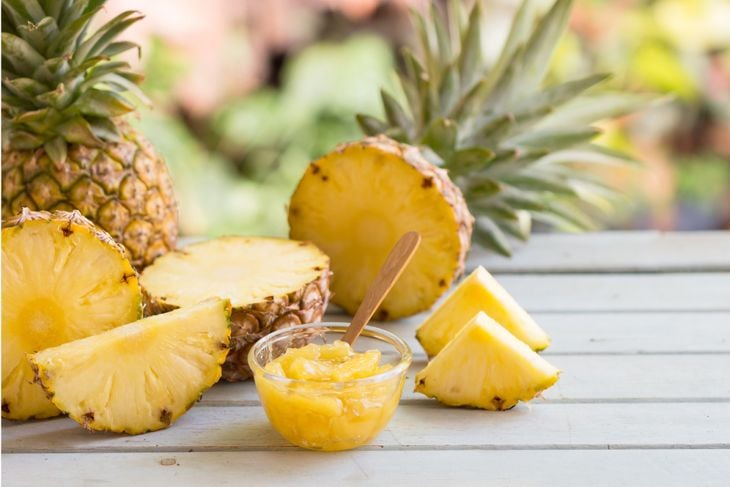
Pineapple

A cup of pineapple has more than 75 mg of vitamin C. Pineapples have a lot of bromelain, an enzyme that can help with food breakdown during digestion, improving the body;'s ability to absorb nutrients. Pineapple is available fresh, frozen, dried, and canned. Many studies suggest frozen fruit has as much, if not more, nutritional value as fresh, though it may affect the flavor.

Kiwi

Kiwi is a great snack for anyone on the go, and it's packed with vitamins C, K, and E, fiber, and potassium. Although you can eat the peel safely, the best way to eat kiwi is to cut it in half and use a spoon to scoop out the center. Kiwi also has lots of antioxidants and anti-inflammatory properties. These fruits are small and easy to prepare, so pack one to eat at your desk at work, or add them to fruit salad.

Grapefruit

The grapefruit diet might not be as trendy as it once was, but grapefruit is still an excellent source of nutrients. A great source of vitamin C, of course, the citrus fruit also contains vitamin A, potassium, and fiber. Grapefruits also offer lycopene, which has been shown to fight cancer-causing cells and reduce the risk of developing tumors. Research shows that grapefruit improves heart health, making it a good option for those with cardiovascular issues. You can drink grapefruit juice and get many of the same health benefits, but eating half a fruit for breakfast or as a mid-afternoon snack is ideal.

Cauliflower

A cup of cauliflower can meet about 85 percent of your recommended daily intake of vitamin C. This vegetable from the brassica family is a healthy way to get vitamin B6, fiber, and potassium into your diet. A cup of cauliflower only has about 25 calories. For maximum nutrients, try raw cauliflower pieces with yogurt dip. You can also steam or boil cauliflower for a healthy side dish.

Broccoli

Broccoli is packed with nearly 135 percent of the recommended daily intake of this important nutrient in a single-cup serving. It also has lots of other healthy components, like vitamin B6, vitamin A, and plenty of fiber. Both the stems and the flowering heads are edible, and the cruciferous veggie can be served cooked or raw.

Brussels Sprouts

Brussels sprouts might not be at the top of everyone's list, but they're full of vitamin C and have fewer than 40 calories per cup. They're also bursting with potassium, vitamin B6, and vitamin A, and a healthy dose of fiber. Steam or roast Brussels sprouts for a healthy, vitamin C-filled side dish with your next meal.

Guava

Guava grows primarily in Central and South America and is not always well-known to North Americans. However, just one cup of the pretty pink fruit contains a whopping 625 percent of your recommended daily vitamin C. It includes 36 percent of recommended fiber, and 20 percent of vitamin A, too. Guava has been known to help with everything from common colds to high blood pressure.

Papaya

The papaya is another tropical fruit full of vitamins and minerals. It makes a great ingredient for smoothies, salads, and other delicious dishes, and delivers about 150 percent of daily vitamin C in every cup. That amount also has less than half a gram of total fat and just 62 calories. Papaya has a sweet, tropical taste with a very smooth consistency.

Cantaloupe

Cantaloupe is a great source of vitamin C. The melon exceeds the recommended daily value for vitamin A and contains plenty of potassium, too. Because vitamin C is very beneficial to immune system function and heart health, cantaloupe is a good choice for those at risk for cardiovascular concerns. Eating a dish of cantaloupe every day can also help fend off viruses and other illnesses by strengthening the immune system.

Can You Give Dogs Vitamin C Tablets

Source: https://facty.com/food/nutrition/15-foods-high-in-vitamin-c/

Share:

Is Niacinamide Better Than Vitamin C

Is Niacinamide Better Than Vitamin C

Everything You Need to Know About Vitamin C

Medically Reviewed by Madeline Hubbard, RN, BSN.

Photo Courtesy: Flashpop/DigitalVision//Getty Images

Whether in the form of a fizzy drink or flavored lozenges, cold and flu preventative supplements almost always highlight vitamin C as one of their key ingredients. So, what's so magical about vitamin C? Also known as ascorbic acid, vitamin C is critical to living healthily. Since the human body cannot spontaneously generate this nutrient, vitamin C must instead be absorbed from outside sources, such as vitamin supplements or foods that are naturally rich in it.

What Does Vitamin C Do?

Commonly found in cold and flu preventative supplements, vitamin C strengthens and speeds up immune system functionality. Though research does not indicate that vitamin C intake alone can prevent the onset of cold or flu, adequate daily intake may shorten the duration of an infection or lessen the severity of symptoms.

Photo Courtesy: Catherine Falls Commercial/Moment/Getty Images

Vitamin C is crucial for the maintenance of well being. For example, it plays a role in wound healing and helps maintain many essential body tissues. It also acts as a potent antioxidant and can repair damage from free radicals, which are linked to aging effects, and disease vulnerability. Additionally, vitamin C can also prevent anemia, since it helps the body increase absorption of dietary iron, another vital mineral that the body cannot spontaneously create.

Foods that contain high concentrations of vitamin C have been linked with a lower risk of cardiovascular disease, like heart attack and stroke. Vitamin C can also increase levels of nitric oxide, a compound that widens blood vessels and, in turn, lowers blood pressure. In addition, regular intake of vitamin C, along with other vitamins, has been linked to a decreased risk for developing age-related cataracts, a leading cause of visual impairment in the United States.

Common Sources of Vitamin C

Vitamin C can be easily obtained through the many different foods, including:

Photo Courtesy: Akaradech Pramoonsin/Moment/Getty Images

  • Citrus fruits and juices (orange, grapefruit, lemon, lime and tangerine)
  • Berries
  • Melons
  • Mangoes
  • Kiwi
  • Tomato
  • Broccoli
  • Red peppers
  • Spinach
  • Squash
  • Potatoes

Cooking these foods may result in the loss of some of the vitamin content, so it is ideal to ingest them raw, either whole or juiced. Nowadays, there are also numerous packaged food products, like cereals, that have been enriched and fortified with vitamin C, so that the nutrient can be easily obtained.

Vitamin C may also be labeled as "L-ascorbic acid" in supplement form, and most over-the-counter multivitamins contain the recommended daily amount of the vitamin. While it is a good source when an individual is in need of a vitamin C boost, supplements are not meant to replace a diet rich in naturally derived vitamin C.

What Happens When You Have Too Much — or Too Little — Vitamin C?

Vitamin C is a water-soluble vitamin that can be easily flushed out of the body via urination when it is not needed. Therefore, if the main source of vitamin C is from naturally occurring foods, it is near-impossible for excess vitamin C to produce side effects. However, taking excessive concentrated vitamin C supplements may lead to diarrhea or stomach upset.

Photo Courtesy: Violeta Stoimenova/E+/Getty Images

Since vitamin C-rich foods are so readily available nowadays, symptoms of inadequate vitamin C intake are also rare in the United States. However, malnourished individuals can experience symptoms of vitamin C deficiency over time, including:

  • Weakness
  • Fatigue
  • Anemia
  • Easy bruising
  • Joint pain
  • Skin breakdown
  • Weakened tooth enamel
  • Gum inflammation

Severe vitamin C deficiency is referred to as scurvy. Scurvy can be easily treated with increased dietary or supplemental vitamin C. Since vitamin C is crucial in the detoxification of the body, a lack of vitamin C can compromise the immune system and make an individual more susceptible to diseases and infections. Individuals with insufficient vitamin C may find that it takes longer than usual to recover from a cold or a physical wound.

Daily Dosage Recommendations:

The daily dosage recommendation for vitamin C is different for everyone, depending on factors such as gender, age, lifestyle and current health condition. The recommended daily dosage for vitamin C is at least 75 mg daily for women and 90 mg for men. Since people who are pregnant, breast feeding, smoking or using oral contraceptives have a lower blood level of vitamin C than others, larger doses of vitamin C may be needed to achieve optimal results in these individuals. Those who have prior or current medical conditions may also require bigger or smaller dosage levels, as recommended by their healthcare providers.

Resource Links:

  • "Vitamin C" via MedlinePlus
  • "Vitamin C and Infections" via MDPI
  • "Extra Dose of Vitamin C Based on a Daily Supplementation Shortens the Common Cold: A Meta-Analysis of 9 Randomized Controlled Trials" via Hindawi, BioMed Research International
  • "Vitamin C" via National Institutes of Health
  • "Scurvy" via U.S. Department of Health & Human Services, National Institutes of Health
  • "Dietary intake and blood concentrations of antioxidants and the risk of cardiovascular disease, total cancer, and all-cause mortality: a systematic review and dose-response meta-analysis of prospective studies" via The American Journal of Clinical Nutrition
  • "Dietary vitamin and carotenoid intake and risk of age-related cataract" via The American Journal of Clinical Nutrition
  • "Cardiovascular System" via Department of Anatomy, Seoul National University College of Medicine (via Springer)

More From SymptomFind.com

Is Niacinamide Better Than Vitamin C

Source: https://www.symptomfind.com/health/vitamin-c-everything-you-need-to-know?utm_content=params%3Ao%3D740013%26ad%3DdirN%26qo%3DserpIndex

Share:

Grape Juice Vitamin C

Grape Juice Vitamin C

Vitamin A Facts: Everything You Need to Know

Medically Reviewed by Dr Samantha Miller, MBChB

Photo Courtesy: Dean Mitchell/E+/Getty Images

Vitamin A should be an integral part of every person's diet. It plays vital roles in your body by helping to maintain your vision, skin health and even your immune system's ability to work properly. But it's important to consume the right amount; vitamin A can be harmful when your body gets too much of it. Learn more about vitamin A, including what it does, where to find it and what happens when you get too much of it.

What Does Vitamin A Do?

Vitamin A is actually a group of fat-soluble vitamins like retinol, retinal and retinyl esters, all of which have various health benefits. Vitamin A is particularly important in the maintenance of vision — especially your ability to see in low light. Your body converts this vitamin to retinal, which combines with other molecules to form rhodopsin. This is the protein principally responsible for your eyes' absorption of light. If you're worried about your vision getting worse over time, make sure you get enough vitamin A. It's a good way to strengthen your sight naturally.

Photo Courtesy: Nastasic/E+/Getty Images

Consuming sufficient amounts of vitamin A can also work wonders for your immune system. Vitamin A promotes the production of white blood cells, particularly T cells, which eliminate viruses and bacteria from your body. Vitamin A also stimulates the production of special T cells called regulatory T cells. These help to reduce the risk of your body attacking its own healthy cells, which is what happens with some autoimmune diseases. Furthermore, vitamin A fortifies the linings of your respiratory, intestinal and urinary tracts, along with your skin and mucous membranes. It also sends additional immune cells there to prevent bacteria from entering your body and causing an infection.

Vitamin A is also involved in the maintenance of healthy skin by helping immature skin cells age properly into mature skin cells. It reduces sebum production, which can be problematic in oily skin. In fact, Isotretinoin is a common prescription-only vitamin A derivative used as a treatment for acne.

Vitamin A can also contribute to improved bone growth, cell division and cell differentiation. It even promotes reproduction and is a healthy supplement for people who are breastfeeding.

Food Sources of Vitamin A

Vitamin A is quite easy to come by naturally. Many of the most basic staples in our diets — meat, eggs, milk and cheese, for example — are excellent sources of vitamin A. Other specific animal sources have high vitamin A levels as well, such as kidney and liver. However, it's important to note that some of these foods have high cholesterol and saturated fat levels, so be sure to keep a healthy balance of these in your diet if you choose to eat them.

Photo Courtesy: GMVozd/E+/Getty Images

Vitamin A exists as either preformed vitamin A or as provitamin A carotenoids. Preformed vitamin A is found in animal and dairy sources. Provitamin A carotenoids include beta-carotene and alpha-carotene, which your body converts into vitamin A and other derivatives. Beta-carotene is found in foods like carrots, pumpkins, sweet potatoes, cantaloupes, grapefruits, spinach, broccoli and apricots. As a general rule, the more vibrant the color of a fruit or vegetable is, the more beta-carotene it contains. As a bonus, you won't have to worry about the fat or cholesterol content in these foods.

Side Effects of Too Much Vitamin A

Getting the right amount of vitamin A in your diet shouldn't have any negative side effects. However, a vitamin A deficiency can lead to health issues over time. If you don't get enough vitamin A, you could develop vision problems. Plus, your immune system could weaken, leaving you susceptible to infectious diseases.

Photo Courtesy: AsiaVision/E+/Getty Images

Perhaps even more serious are the side effects of consuming too much vitamin A, also known as hypervitaminosis A. Initially, too much vitamin A can cause headaches, dizziness, nausea and even vomiting. Because vitamin A is fat-soluble, it tends to get stored in your liver if you consume too much of it, which can lead to liver problems and even liver failure. There's also evidence that getting excess vitamin A can cause osteoporosis and bone fractures.

In particular, pregnant people must be careful about their intake of vitamin A, as getting too much vitamin A can cause birth defects. Pregnant people shouldn't eat foods that are high in vitamin A, such as pate and fish liver oil. In general, babies and small children are more sensitive to vitamin A overdoses and deficiencies, so it's important to closely monitor their daily vitamin A consumption, too.

Taking Vitamin A: Daily Dosage Recommendations

According to the Institute of Medicine Food and Nutrition Board, most adult men should consume around 900 micrograms (mcg) of vitamin A per day, and women should have around 700mcg per day. The recommended daily intake is lower (750–770mcg per day) in pregnant people and higher (1200–1300mcg per day) for people who are breastfeeding.

Photo Courtesy: PeopleImages/E+/Getty Images

The daily dosage for children varies with age. From 0 to 6 months, infants should have 400mcg per day, after which they should consume 500mcg per day until they reach the age of 1. Children 1 to 3 years of age should get 300mcg per day, while those from 4 to 8 years of age need 400mcg per day. Those from 9 to 13 years old need 600mcg each day. Daily recommendations for children don't change based on gender.

These dosage requirements are general guidelines. Individuals may have differing daily recommendations for vitamin A, depending on their health status and lifestyle. Most people can get a sufficient amount of vitamin A simply by eating a balanced diet. Consult a doctor before taking any vitamin A supplements or changing from the recommended dosage for your age and sex.

In summary, it's important to be aware of the foods that'll give you an adequate supply of vitamin A. Provided you have a balanced diet, you might not need to take vitamin A supplements. Be aware of foods containing high levels of vitamin A, and avoid eating too much of these, particularly during pregnancy.

Resource Links:

https://medlineplus.gov/vitamina.html

https://bnf.nice.org.uk/treatment-summary/vitamins.html

https://www.nhs.uk/conditions/vitamins-and-minerals/vitamin-a/

https://ods.od.nih.gov/factsheets/VitaminA-Consumer/

https://ods.od.nih.gov/factsheets/VitaminA-HealthProfessional/

https://www.ncbi.nlm.nih.gov/pmc/articles/PMC6470929/pdf/nutrients-11-00681.pdf

More From SymptomFind.com

Grape Juice Vitamin C

Source: https://www.symptomfind.com/health/vitamin-a-facts-know?utm_content=params%3Ao%3D740013%26ad%3DdirN%26qo%3DserpIndex

Share:

Mary Ruth Vitamin C

Mary Ruth Vitamin C

Brand: Maryruth Organics

(1000+)

Vegan Kids Multivitamin Gummies by MaryRuth's - Organic Ingredients - Immune Boost - Methylfolate - Sugar Free - Non-GMO Vitamin Chewables 60ct

current price $29.95

Vegan Kids Multivitamin Gummies by MaryRuth's - Organic Ingredients - Immune Boost - Methylfolate - Sugar Free - Non-GMO Vitamin Chewables 60ct

4.9 out of 5 Stars. 106 reviews

2 days

MaryRuth Organics Organic Elderberry Liquid Drops, Herbals, Blueberry + Raspberry, 1 fl oz (30 ml)

current price $19.95

MaryRuth Organics Organic Elderberry Liquid Drops, Herbals, Blueberry + Raspberry, 1 fl oz (30 ml)

4.9 out of 5 Stars. 347 reviews

Liquid Multivitamin + Minerals, Amino Acids, Biotin & Folate | Unisex | Made by MaryRuth Organics

current price $39.95

Liquid Multivitamin + Minerals, Amino Acids, Biotin & Folate | Unisex | Made by MaryRuth Organics

5 out of 5 Stars. 885 reviews

2 days

Prenatal & Postnatal Liquid Multivitamin | B12, Vitamin A, Potassium Iodide | Woman | MaryRuth Organics

current price $39.95

Prenatal & Postnatal Liquid Multivitamin | B12, Vitamin A, Potassium Iodide | Woman | MaryRuth Organics

1 out of 5 Stars. 1 reviews

Liquid Iron Vitamin Dietary Supplements for Kids & Adults | MaryRuth Organics | 15.22 fl oz.

current price $24.95

Liquid Iron Vitamin Dietary Supplements for Kids & Adults | MaryRuth Organics | 15.22 fl oz.

Vegan Vitamin D3+B12 Gummy (Sugar Free) by MaryRuth's | 2 Month Supply | Made w/Organic Ingredients Non-GMO Vegan Gluten Free for Men, Women & Kids 1000 IU Vitamin D3 & 250 mcg Vitamin B12 (Raspberry)

current price $26.95

Vegan Vitamin D3+B12 Gummy (Sugar Free) by MaryRuth's | 2 Month Supply | Made w/Organic Ingredients Non-GMO Vegan Gluten Free for Men, Women & Kids 1000 IU Vitamin D3 & 250 mcg Vitamin B12 (Raspberry)

4.9 out of 5 Stars. 41 reviews

2 days

USDA Organic Vegan Vitamin D3+K2 (MK-7) Liquid MaryRuth???s | Strong Bones, Heart Health, Calcium Absorption | Plant-Based, Non-GMO | Formulated Kids Ages Years

current price $31.12

USDA Organic Vegan Vitamin D3+K2 (MK-7) Liquid MaryRuth???s | Strong Bones, Heart Health, Calcium Absorption | Plant-Based, Non-GMO | Formulated Kids Ages Years

Organic Protein Powder Plant-Based (Creamy Chocolate Fudge) by MaryRuth's Vegan, Gluten Free, Free, Dairy Free, Fillers, No Additives, Paleo 14.8 Women

current price $42.88

Organic Protein Powder Plant-Based (Creamy Chocolate Fudge) by MaryRuth's Vegan, Gluten Free, Free, Dairy Free, Fillers, No Additives, Paleo 14.8 Women

Organic Vitamin K2 (MK7) Liquid Drops by MaryRuth's Non-GMO Vegan, Soft Taste for Men, Women & Children, 1oz Glass Bottle

current price $23.95

Organic Vitamin K2 (MK7) Liquid Drops by MaryRuth's Non-GMO Vegan, Soft Taste for Men, Women & Children, 1oz Glass Bottle

4.9 out of 5 Stars. 139 reviews

Omega 3-6-7-9 Gummies | Unisex | Made by MaryRuth Organics

current price $33.95

Omega 3-6-7-9 Gummies | Unisex | Made by MaryRuth Organics

Mary Ruth Vitamin C

Source: https://www.walmart.com/c/brand/brand-maryruth-organics

Share:
banner